The Ghost Particle: Majorana Fermions and the Secret Language of the Universe

There are discoveries in physics that rearrange the furniture of reality. And then there are discoveries that make you question whether the house was ever there at all. Majorana fermions belong to the second kind — particles that are their own antiparticles, a concept so quietly radical it sat forgotten for eight decades. But today, the scientific world is waking up to what they might actually mean.
The Man Who Disappeared
To understand the particle, you must first understand the man. Ettore Majorana was born in Sicily in 1906, into a family of scientists and intellects. By the time he reached Rome in the late 1920s, the great Enrico Fermi — himself a future Nobel laureate — said something remarkable about him. Fermi had known many brilliant people. But Majorana, he said, was in a different category entirely. A genius of the order of Galileo and Newton.
Those are not words Fermi chose lightly.
In 1937, Majorana published a paper that would define his legacy. Working with the Dirac equation — the equation that governs the behavior of quantum particles with spin — he asked a question nobody else had thought to ask: What if a particle's antiparticle were not something separate, but the particle itself?
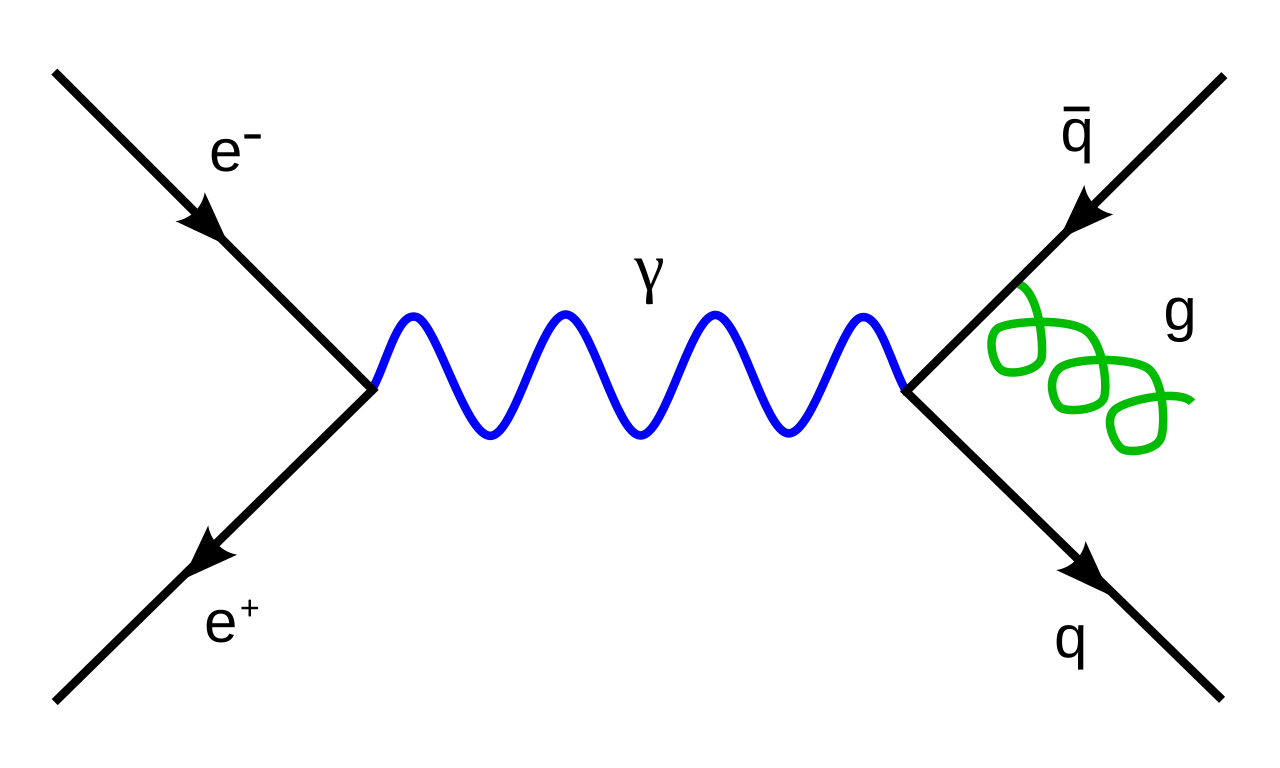
Paul Dirac had predicted antimatter from his own equation years earlier. Every particle, Dirac showed, has a mirror-image antiparticle with opposite charge. When matter meets antimatter, they annihilate each other in a flash of energy. But Majorana noticed a loophole. For electrically neutral particles, there was no mathematical reason the particle and its antiparticle had to be distinct. They could be the same thing. He called them Majorana fermions.
A year later, in March of 1938, Ettore Majorana boarded a ship in Palermo. He was never seen again. No body was ever found. No explanation was ever confirmed. He simply vanished — as mysteriously as the particle that would carry his name. The equations, however, remained.
"There are those in the first rank, like Fermi. And then there is Majorana, in a category of his own — like Galileo and Newton."
— Enrico Fermi, on Ettore Majorana
A Place at the Edge of Reality
All matter in the universe is made of fermions — particles with half-integer spin, like electrons, quarks, and neutrinos. The forces between them are carried by bosons. This division, encoded in the Standard Model of particle physics, has held with extraordinary precision since the 1970s.
But the Standard Model has cracks. It cannot explain dark matter. It offers no satisfying account of why the universe contains more matter than antimatter. And it leaves a fundamental question open: What is the neutrino, really?
The neutrino is electrically neutral. Of all known particles, it is the most likely candidate to be a Majorana fermion. If the neutrino is Majorana in nature, it would help explain the matter-antimatter asymmetry that allowed the universe to exist. It would validate the seesaw mechanism, an elegant theory explaining why neutrinos are so eerily light, and open a window onto physics far beyond the Standard Model.
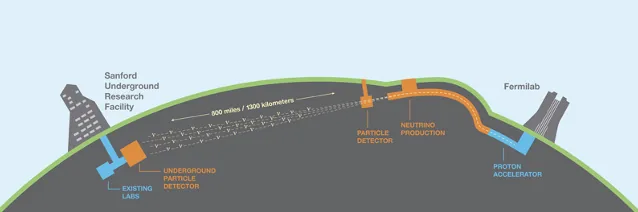
Physicists are hunting for a signal called neutrinoless double beta decay — a radioactive process that can only occur if neutrinos are Majorana particles. Experiments buried deep underground, shielded from cosmic rays, are listening for that signal right now. Facilities like GERDA in Italy's Gran Sasso mountain and MAJORANA Demonstrator in South Dakota have been listening for years. The signal, if it exists, would arrive as a single sharp peak in an energy spectrum — the quiet signature of a particle meeting itself.
The Particle That Hides in Plain Sight
In condensed matter physics — the study of how matter behaves in large collections of atoms — something extraordinary has been happening. Scientists have discovered that quasiparticles, collective excitations of electrons in certain materials, can behave exactly like Majorana fermions, even though no single fundamental Majorana particle exists in isolation.
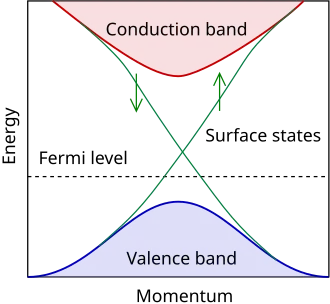
These are sometimes called Majorana zero modes, and they emerge at the edges of a peculiar class of materials known as topological superconductors. In certain carefully engineered systems — nanowires cooled to near absolute zero, exposed to magnetic fields and coaxed into a superconducting state — Majorana-like excitations appear at the endpoints of the wire. They are not quite particles. They are patterns. Resonances in the quantum fabric of the material. But they obey Majorana's mathematics with eerie precision.
Why Topology Changes Everything
Topology is the branch of mathematics concerned not with precise measurements, but with fundamental shape. A coffee cup and a donut are topologically identical — both have one hole. Majorana zero modes are topological objects whose quantum information is stored in the global topology of the system, not in any local property that vibrations, temperature, or stray fields can disturb.

The Future That Majorana Fermions Promise
Topological Quantum Computing
Quantum computers are extraordinarily sensitive machines. Their basic unit of information, the qubit, exists in a delicate superposition of states that collapses at the slightest disturbance. Keeping qubits coherent is one of the defining engineering challenges of our time — which is why quantum computers today must operate at temperatures colder than outer space.

Majorana-based qubits are fundamentally different. Because the information is topologically protected — woven into the global structure of the system rather than stored locally — they are naturally resistant to the environmental noise that plagues conventional qubits. This is not merely an incremental improvement. It is a different philosophy of information storage.
A Majorana quantum computer could operate with orders of magnitude fewer error-correction resources than conventional approaches — making it faster, more scalable, and capable of solving problems that no classical computer could ever reach.
Unlocking the Mystery of Antimatter
If the neutrino is confirmed to be a Majorana particle, it would provide a mechanism — through a process called leptogenesis — explaining why the early universe produced more matter than antimatter. A Majorana neutrino would answer one of the deepest questions ever posed: Why does anything exist at all?
New Windows into Dark Matter
Some extensions of particle physics that invoke Majorana fermions also predict new neutral particles in the dark matter range. These sterile neutrinos — Majorana particles that interact even more weakly than ordinary neutrinos — are serious dark matter candidates. If they exist, the invisible scaffold of the universe is built from Majorana matter.
Quantum Cryptography and Secure Communication
Topological systems could also underpin new forms of quantum cryptography — communication so fundamentally secure that eavesdropping would be physically impossible without detectable disruption.
A Particle That Teaches Us Something About Identity
In ordinary matter, particles and antiparticles are distinct. An electron is not a positron. They are separate entities that annihilate each other on contact. A Majorana fermion collapses that distinction. It is one thing, complete in itself, carrying no internal opposition. It does not annihilate because there is nothing to annihilate against. It simply is.
Ettore Majorana found the mathematics that describes such an entity, wrote it down in 1937, and vanished. The particle that bears his name may yet transform human technology, answer the deepest questions in cosmology, and rewrite our understanding of matter itself. Not bad for a ghost.
Some ideas are too strange to stay forgotten.