The NVIDIA Revolution: How CUDA Conquered the AI World
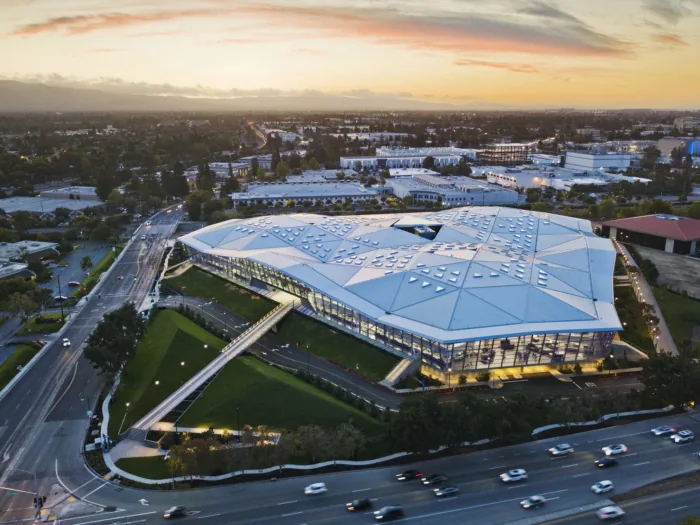
In 1993, three engineers with a vision met at a Denny's restaurant in San Jose, California. Jensen Huang, Chris Malachowsky, and Curtis Priem sketched out plans on paper napkins for a company that would revolutionize computer graphics. They named it NVIDIA, a play on the Latin word "invidia" meaning envy. Little did they know that their creation would eventually power the artificial intelligence revolution that would transform humanity itself.
Today, NVIDIA stands as the most valuable semiconductor company in the world, with a market capitalization exceeding $1.2 trillion as of 2024. But this isn't just a story about financial success—it's about how a company betting on parallel computing fundamentally changed what computers can do.
The Gaming Gambit: Building the Foundation
NVIDIA's initial mission was straightforward: create graphics processors that would bring realistic 3D gaming to personal computers. In 1999, they released the GeForce 256, which they boldly marketed as the world's first GPU (Graphics Processing Unit). This wasn't mere marketing hyperbole—it represented a fundamental shift in computing architecture.
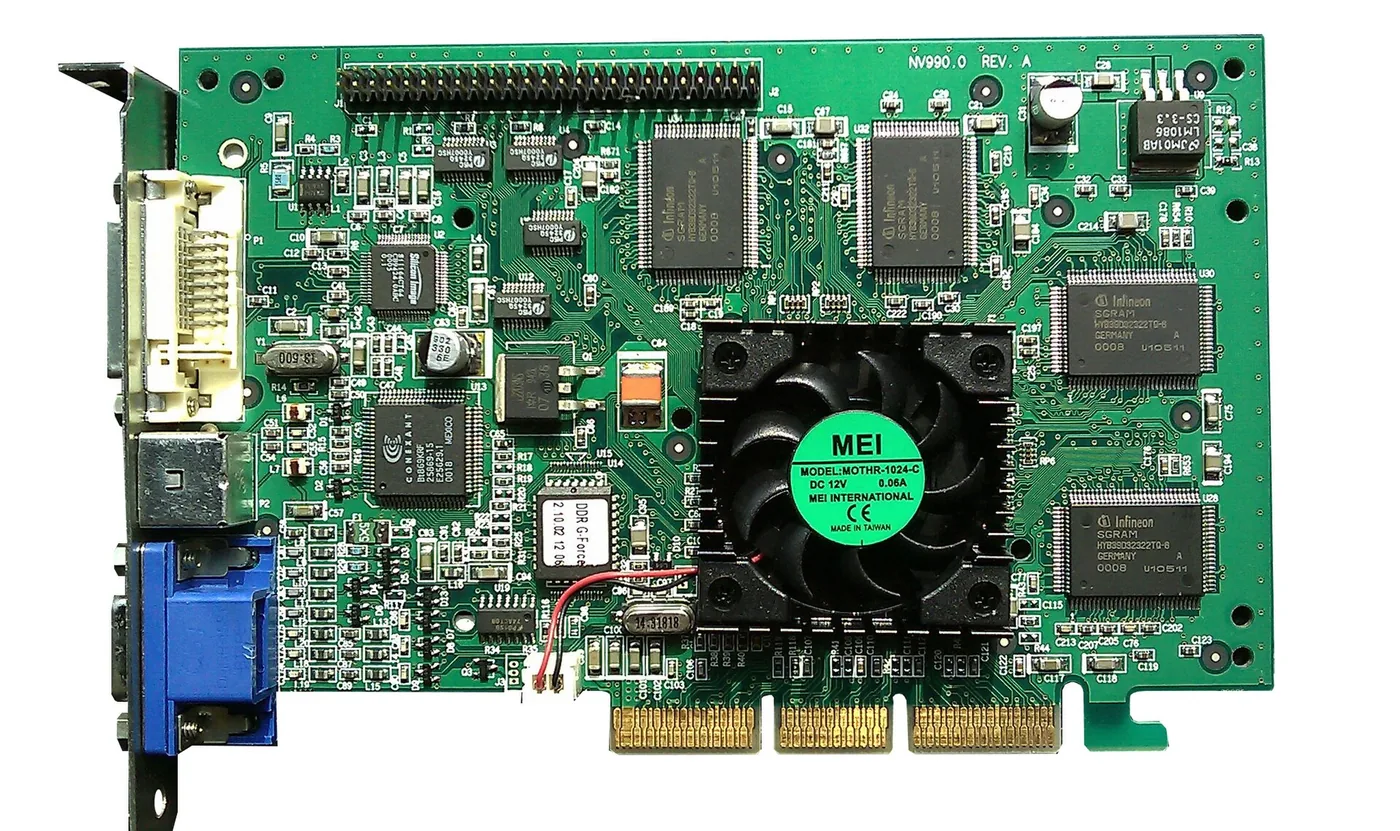
Traditional CPUs (Central Processing Units) were designed to handle complex tasks sequentially, executing one instruction after another with incredible speed. GPUs took a radically different approach: they could handle thousands of simpler operations simultaneously. While a CPU might have 4 to 16 cores, early GPUs packed hundreds of smaller, specialized cores optimized for parallel processing.
Why does this matter? Rendering a single frame in a video game requires calculating the color, lighting, and position of millions of pixels simultaneously. Sequential processing would be painfully slow. Parallel processing makes it instantaneous. This same principle would later prove revolutionary for AI.
The CUDA Watershed Moment: 2006
By the mid-2000s, researchers in various fields began recognizing that GPUs' parallel processing power could accelerate scientific computations far beyond gaming. However, programming GPUs required mastering complex graphics APIs designed for rendering images, not solving equations or processing data.
November 2006: The Birth of CUDA
NVIDIA launched CUDA (Compute Unified Device Architecture), a revolutionary platform that allowed developers to write programs for GPUs using C/C++ instead of graphics-specific languages. This was NVIDIA's moonshot bet—investing billions into a technology with no immediate commercial market.
Jensen Huang's decision to invest in CUDA was audacious. Wall Street analysts questioned why a gaming graphics company would spend enormous resources on scientific computing tools. But Huang saw what others missed: the future of computing wasn't just about making games prettier—it was about enabling entirely new categories of computation.
How CUDA Works: Parallel Computing Simplified
To understand CUDA's revolutionary impact, imagine you need to paint a massive wall with 10,000 bricks, each a different color. You have two options:
Traditional CPU Approach vs. CUDA GPU Approach
CPU Method (Sequential)
One highly skilled painter works alone, painting each brick perfectly, one at a time. Fast per brick, but 10,000 bricks takes forever.
Time: 10,000 seconds (if 1 second per brick)GPU Method (Parallel)
1,000 painters work simultaneously, each painting 10 bricks. Each painter is slower than the expert, but together they finish exponentially faster.
Time: 20 seconds (if each slower painter takes 2 seconds per brick)CUDA provides the framework for coordinating those thousand painters. It handles three critical functions:
Break problems into parallel chunks
Distribute data to GPU cores
Collect & combine results
The CUDA Programming Model:
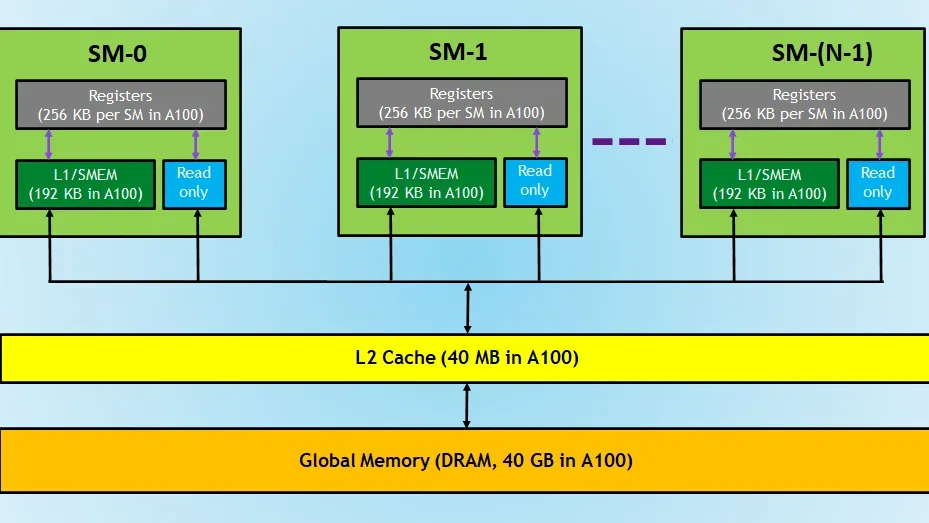
Developers write code in familiar languages (C, C++, Python) and designate which functions should run in parallel on the GPU. CUDA automatically manages the complex choreography of distributing work across thousands of GPU cores, moving data between CPU and GPU memory, and reassembling the results.
The Early Adopters: Science Discovers CUDA
While CUDA initially struggled to find mainstream adoption, scientific researchers immediately recognized its potential. The early 2010s saw breakthrough after breakthrough:
- Astrophysics: Simulations of galaxy formation that once took months on CPU clusters now ran in days on GPU-accelerated systems.
- Molecular Dynamics: Drug discovery research used CUDA to simulate protein folding, accelerating pharmaceutical development by factors of 50x to 100x.
- Climate Modeling: Weather prediction and climate change models achieved unprecedented resolution and speed, enabling more accurate long-term forecasts.
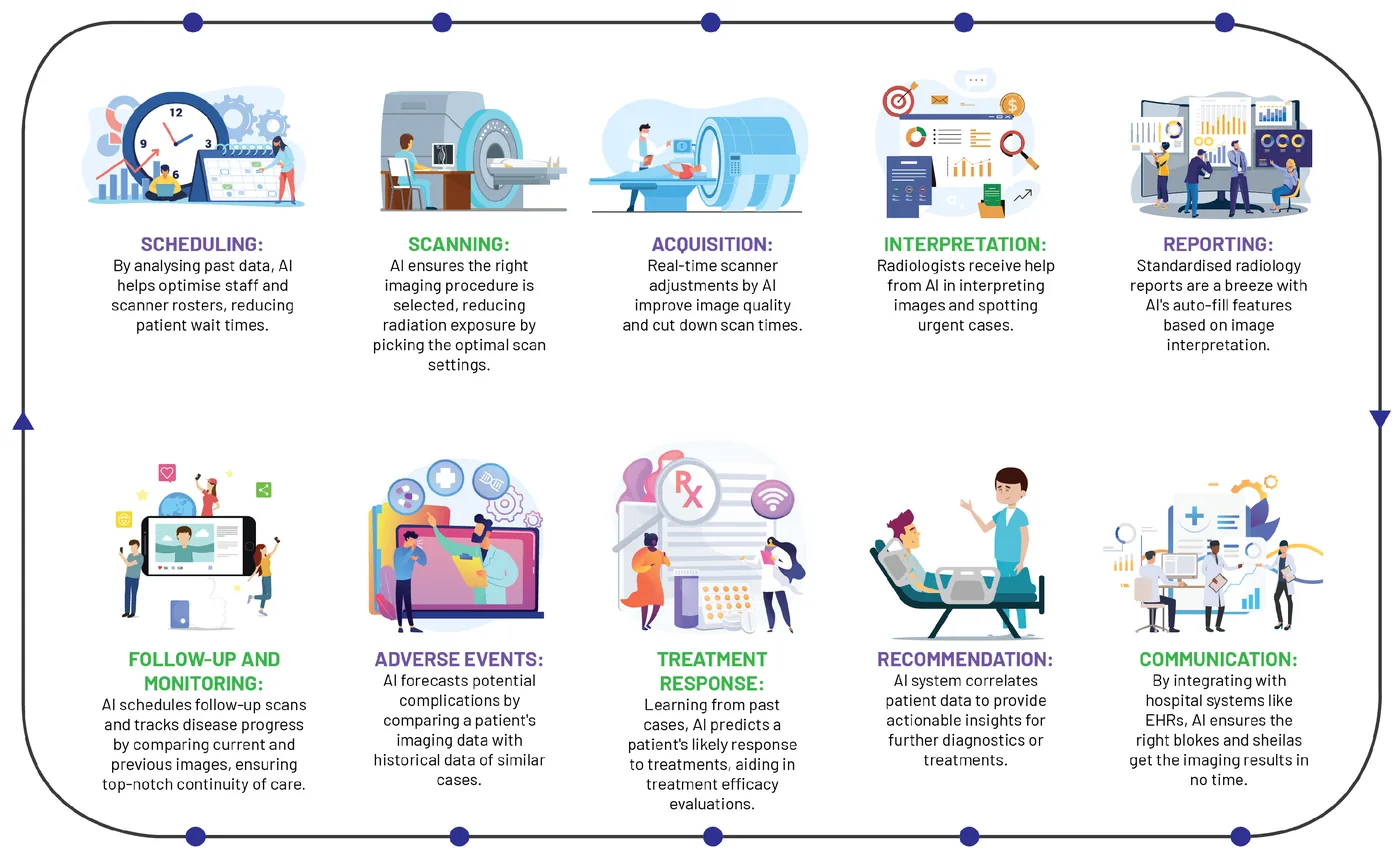
- Medical Imaging: MRI and CT scan processing times plummeted from hours to minutes, enabling real-time 3D reconstructions during surgeries.
Real-World Impact: The Human Genome Project
The original Human Genome Project (1990-2003) cost $2.7 billion and took 13 years to sequence one human genome. By 2023, using CUDA-accelerated sequencing, the same task costs under $600 and completes in under 24 hours—a 45,000x cost reduction and 4,745x speed improvement.
The Deep Learning Explosion: CUDA Meets AI
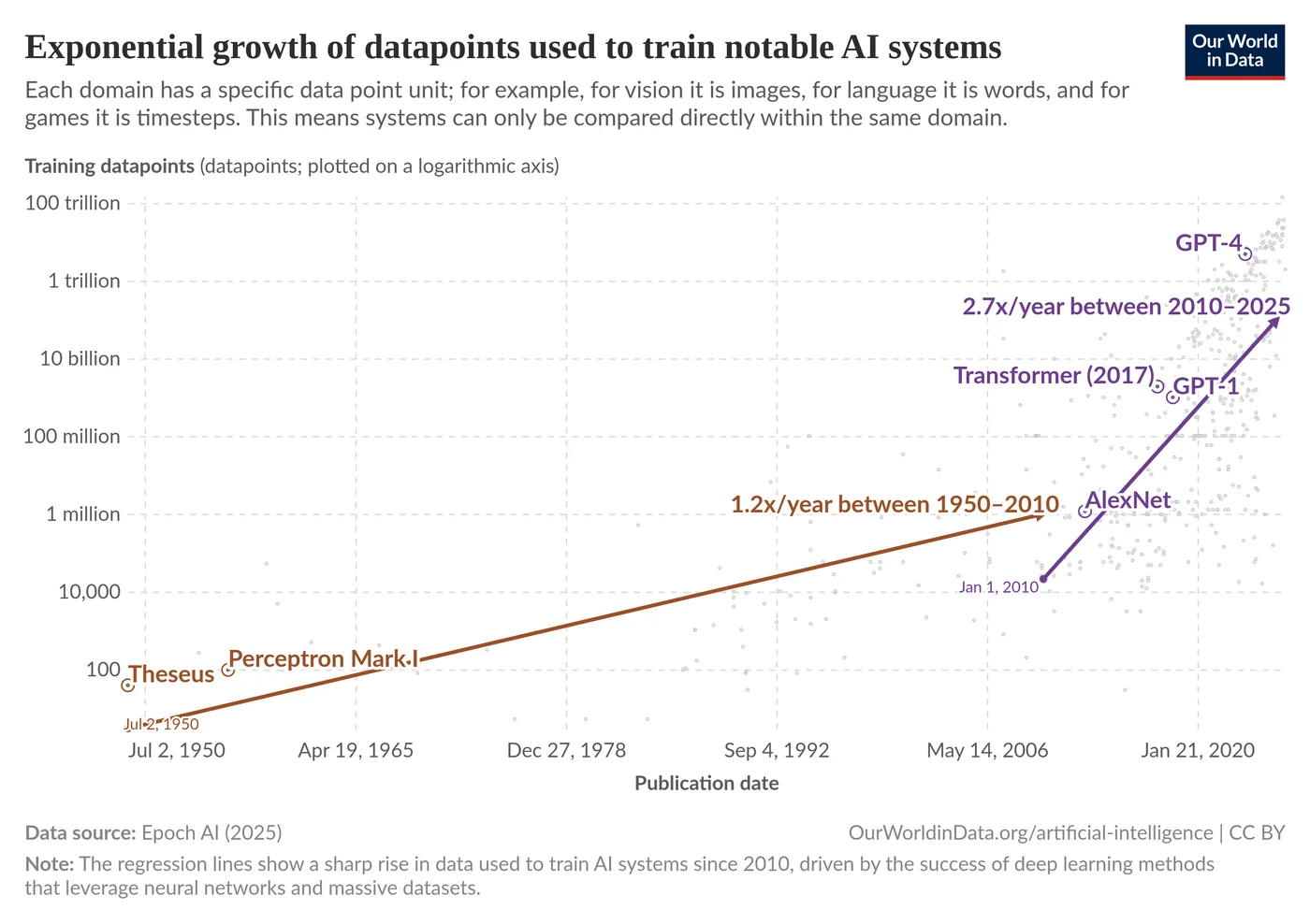
In 2012, everything changed. Three researchers—Alex Krizhevsky, Ilya Sutskever, and Geoffrey Hinton—used CUDA-powered NVIDIA GPUs to train a neural network called AlexNet for the ImageNet competition. Their approach demolished previous records, reducing error rates from 26% to 15% overnight.
— Jensen Huang, NVIDIA CEO
The secret wasn't just the algorithm—it was the hardware. Training AlexNet required performing trillions of matrix multiplications, the exact type of parallel computation GPUs excel at. What would have taken weeks or months on CPUs completed in days on NVIDIA GPUs with CUDA.
Why GPUs Are Perfect for Neural Networks
Neural networks learn by adjusting millions or billions of numerical weights through a process called backpropagation. Each training iteration involves:
- Forward Pass: Multiply input data by millions of weights to generate predictions
- Loss Calculation: Compare predictions to actual answers
- Backward Pass: Calculate how each weight contributed to errors
- Weight Update: Adjust millions of weights simultaneously
Every single one of these steps involves massive parallel matrix operations—precisely what CUDA-enabled GPUs were designed to accelerate.
The Ecosystem Effect: Building the CUDA Moat
NVIDIA's genius wasn't just creating CUDA—it was fostering an entire ecosystem around it. By 2025, CUDA has become the de facto standard for GPU computing, supported by:
Every major AI framework—TensorFlow, PyTorch, JAX—is built on CUDA. Every major cloud provider—Amazon AWS, Microsoft Azure, Google Cloud—offers CUDA-based GPU instances. Millions of developers have learned CUDA, creating an insurmountable network effect that makes competing platforms nearly impossible to establish.
The CUDA Moat: Competitors like AMD and Intel have created their own GPU computing platforms (ROCm and oneAPI respectively), but they face a chicken-and-egg problem. Developers use CUDA because that's where the tools and libraries are. Tool creators target CUDA because that's where the developers are. Breaking this cycle requires not just matching CUDA's capabilities, but exceeding them by such a margin that developers will endure the pain of migration.
CUDA's Impact Across Industries
1. Artificial Intelligence and Machine Learning
The AI revolution runs on CUDA. From ChatGPT to DALL-E, from autonomous vehicles to medical diagnosis systems, virtually every major AI breakthrough of the past decade was trained on CUDA-enabled NVIDIA GPUs.
- Large Language Models: Training GPT-4 required thousands of NVIDIA A100 GPUs running for months, performing operations that would take centuries on CPUs.
- Computer Vision: Self-driving cars process sensor data in real-time using CUDA-accelerated neural networks, making split-second decisions at highway speeds.
- Recommendation Systems: Netflix, YouTube, and Spotify use CUDA-powered systems to analyze billions of user interactions and generate personalized recommendations instantly.
2. Scientific Research and Simulation
CUDA has democratized supercomputing. Research that once required access to national laboratories can now be performed on workstations.
COVID-19 Vaccine Development
During the pandemic, researchers used CUDA-accelerated systems to simulate protein interactions and screen millions of drug candidates in weeks instead of years. The unprecedented speed of vaccine development owed partly to this computational acceleration.
- Quantum Chemistry: Simulating molecular behavior at quantum scales for materials science and drug design.
- Cosmology: Processing data from telescopes like the James Webb Space Telescope requires massive parallel computing to transform raw sensor data into stunning images.
- Seismology: Real-time earthquake detection and analysis using CUDA to process seismic data from thousands of sensors simultaneously.
3. Education and Research
CUDA has transformed computer science education. Universities worldwide teach parallel computing using CUDA, creating a generation of developers who think in parallel from day one.
The CUDA Educational Initiative
NVIDIA's Academic Program partners with over 2,000 universities globally, providing free access to CUDA tools, educational resources, and even GPU hardware. This investment in education ensures the next generation of researchers and developers will continue building on the CUDA platform.
4. Creative Industries
Film production, game development, and architectural visualization have been transformed by CUDA-accelerated rendering and simulation.
- Visual Effects: Movies like Avatar and The Avengers use CUDA-powered rendering farms to create photorealistic CGI in timeframes that make production schedules feasible.
- Real-time Ray Tracing: NVIDIA's RTX technology combines CUDA with specialized ray-tracing cores to deliver lighting and reflections that were impossible in real-time just five years ago.
- AI-Enhanced Creativity: Tools like Adobe's AI features, Topaz Labs upscaling, and NVIDIA's Canvas app use CUDA to enable AI-powered image editing and generation.

The Architecture Evolution: From Fermi to Hopper
NVIDIA hasn't rested on CUDA's success. Each generation of GPU architecture has introduced innovations specifically designed to accelerate AI and scientific computing:
2010 - Fermi: The First True Compute GPU
Introduced double-precision floating-point performance and ECC memory, making GPUs viable for mission-critical scientific computing.
2016 - Pascal: The Deep Learning Accelerator
Introduced NVLink for faster GPU-to-GPU communication, essential for training massive neural networks across multiple GPUs.
2017 - Volta: Tensor Cores Arrive
Revolutionary Tensor Cores specifically designed for matrix operations used in deep learning, providing up to 12x speedup for AI training.
2020 - Ampere: AI for Everyone
Brought Tensor Cores to consumer GPUs, democratizing AI development and enabling local AI inference on gaming hardware.
2022 - Hopper: The Transformer Engine
Purpose-built for the transformer architectures powering ChatGPT and similar models, with a Transformer Engine that optimizes precision dynamically.
NVIDIA's Current Mission: Accelerating the AI Era
Today, NVIDIA's ambitions extend far beyond graphics and parallel computing. The company has positioned itself as the essential infrastructure provider for the AI revolution, with three primary strategic goals:
1. Omniverse and the Metaverse
NVIDIA Omniverse is a platform for creating and operating shared virtual worlds. Using CUDA-accelerated physics simulation and rendering, it enables real-time collaboration in photorealistic 3D environments. Applications range from architectural design to factory planning to training autonomous robots in virtual environments before deploying them in the real world.
2. AI Inference at the Edge
While training giant AI models requires massive data centers, running those models (inference) increasingly happens on edge devices—smartphones, IoT sensors, autonomous vehicles. NVIDIA's Jetson platform brings CUDA-accelerated AI to embedded systems, enabling intelligent devices everywhere.
3. Accelerated Computing Everywhere
Jensen Huang frequently declares that "accelerated computing is the path forward" as Moore's Law slows. NVIDIA envisions a future where GPUs and specialized accelerators handle the heavy computational lifting for everything from databases to web services to scientific instruments.
By 2025, NVIDIA powers 90% of AI training infrastructure globally. Their GPUs are in every major cloud provider's data centers, every major research institution, and millions of developers' workstations. CUDA isn't just a programming platform—it's the foundation of the AI revolution.
The Competitive Landscape: Can Anyone Challenge CUDA?
NVIDIA's dominance in AI computing is unprecedented, but competitors aren't standing still:
- AMD with ROCm: Offers competitive hardware at lower prices, but the software ecosystem lags years behind CUDA.
- Intel with oneAPI: Attempting to create a unified programming model across CPUs, GPUs, and FPGAs, but adoption remains limited.
- Google's TPUs: Purpose-built for TensorFlow, offering excellent performance but locked to Google Cloud.
- Custom AI Chips: Companies like Tesla, Amazon, and Apple are designing their own AI accelerators, but these are narrowly focused on specific use cases.
The challenge facing competitors isn't just hardware performance—it's the CUDA software ecosystem. Rewriting millions of lines of CUDA code to work on alternative platforms represents an enormous barrier to switching.
The Future: Where CUDA and NVIDIA Go Next
As we look toward 2030 and beyond, several trends will shape NVIDIA's trajectory:
Quantum-Classical Hybrid Computing
As quantum computers mature, they won't replace classical computers—they'll work alongside them. NVIDIA is positioning CUDA as the bridge, with tools for orchestrating quantum-classical hybrid workflows where GPUs handle classical computation and quantum processors tackle specific quantum algorithms.
Biological Computing
The convergence of AI and biology is accelerating. NVIDIA's BioNeMo platform uses CUDA to train AI models on biological data, from protein structures to genetic sequences, potentially revolutionizing drug discovery and personalized medicine.
Sustainable Computing
As AI models grow exponentially, their energy consumption becomes a critical concern. NVIDIA's focus on performance-per-watt and liquid cooling solutions for data centers addresses the environmental impact of AI infrastructure.
The Next Frontier: AGI Infrastructure
If and when artificial general intelligence (AGI) emerges, it will almost certainly be trained on NVIDIA GPUs running CUDA. The company is investing heavily in the infrastructure and tools needed to train models orders of magnitude larger than today's GPT-4 or Claude. Their DGX SuperPOD systems can link thousands of GPUs into unified computing fabrics capable of training trillion-parameter models.
The Broader Impact: How CUDA Changed Computing Forever
CUDA's influence extends beyond NVIDIA's commercial success. It fundamentally changed how computer scientists think about problem-solving:
- Parallel-First Thinking: A generation of developers now considers parallelization from the start rather than as an afterthought.
- Heterogeneous Computing: The notion that different processors (CPUs, GPUs, specialized accelerators) should work together on different parts of a problem is now standard practice.
- Democratized Supercomputing: Computational power once reserved for elite institutions is now accessible to individual researchers and startups.
- Accelerated Discovery: The pace of scientific discovery has fundamentally accelerated across dozens of fields, from materials science to genomics.
— Ian Buck, former VP of Accelerated Computing at NVIDIA
Real-World Success Stories
DeepMind's AlphaFold: Solving a 50-Year-Old Problem
In 2020, DeepMind's AlphaFold2 used CUDA-accelerated GPUs to solve the protein folding problem—predicting a protein's 3D structure from its amino acid sequence with near-experimental accuracy. This achievement, which earned recognition as one of Science magazine's Breakthroughs of the Year, would have been impossible without the computational power CUDA provides.
OpenAI's GPT Series: The Language Revolution
Every version of GPT, from the original to GPT-4, was trained on massive clusters of NVIDIA GPUs. The training of GPT-3 alone consumed approximately 355 GPU-years of computation. CUDA's efficient handling of the enormous matrix multiplications required for transformer models made these breakthroughs economically feasible.
Tesla's Autopilot: Driving the Future
Tesla's self-driving capabilities rely on neural networks trained using NVIDIA's DGX systems and CUDA. The company processes billions of miles of driving data to continuously improve their models, with CUDA enabling the rapid iteration required for safety-critical systems.
The Multiplier Effect
For every breakthrough achieved using CUDA—whether in medicine, climate science, or AI—dozens of follow-up discoveries become possible. The technology doesn't just solve problems; it expands the frontier of what problems we can attempt to solve.
Learning CUDA: The Path for Developers
For developers interested in harnessing GPU acceleration, the CUDA learning curve has flattened significantly over the years:
Getting Started with CUDA
- High-Level Frameworks: Most developers never write raw CUDA code, instead using frameworks like TensorFlow, PyTorch, or RAPIDS that handle GPU acceleration automatically.
- CUDA Libraries: NVIDIA provides highly optimized libraries (cuDNN for deep learning, cuBLAS for linear algebra, etc.) that handle common operations.
- Direct CUDA Programming: For specialized needs, CUDA C/C++ provides fine-grained control over GPU execution.
The barrier to entry continues to lower. In 2025, tools like NVIDIA's Nsight suite provide sophisticated debugging and profiling, while platforms like Google Colab offer free access to CUDA-enabled GPUs for experimentation and learning.
The Philosophical Question: Has CUDA Changed What Intelligence Means?
Perhaps CUDA's most profound impact isn't technical but philosophical. By making it computationally feasible to train neural networks with billions of parameters, CUDA has enabled AI systems that exhibit behaviors we once thought required human intelligence—creativity, reasoning, even apparent understanding.
These capabilities emerged not from algorithmic breakthroughs alone, but from the ability to process vast amounts of data through repeated iterations—precisely what CUDA-accelerated GPUs excel at. In a sense, CUDA didn't just accelerate computation; it revealed that intelligence itself might be, at least in part, a function of computational scale and efficiency.
The Numbers Tell the Story
From a Denny's napkin sketch to powering the AI revolution, NVIDIA and CUDA have rewritten the rules of computing. The journey from gaming graphics to training ChatGPT represents one of technology's most remarkable pivots. As we stand on the threshold of even more powerful AI systems, quantum computing, and computational breakthroughs we can't yet imagine, one thing is certain: CUDA will be there, accelerating the future.